
Hi,
Confidence with money grows when we are curious and increase our knowledge.
This week’s issue explores:
• How women are building confidence with money
• Ideas shaping the future of money
• One practical step to strengthen your financial readiness
🧠 Opening Thought
Money decisions often begin with identity, experience, and emotion.
When we understand how we relate to money, we can make clearer choices with confidence and intention.
Financial readiness grows when we engage with money on our own terms.
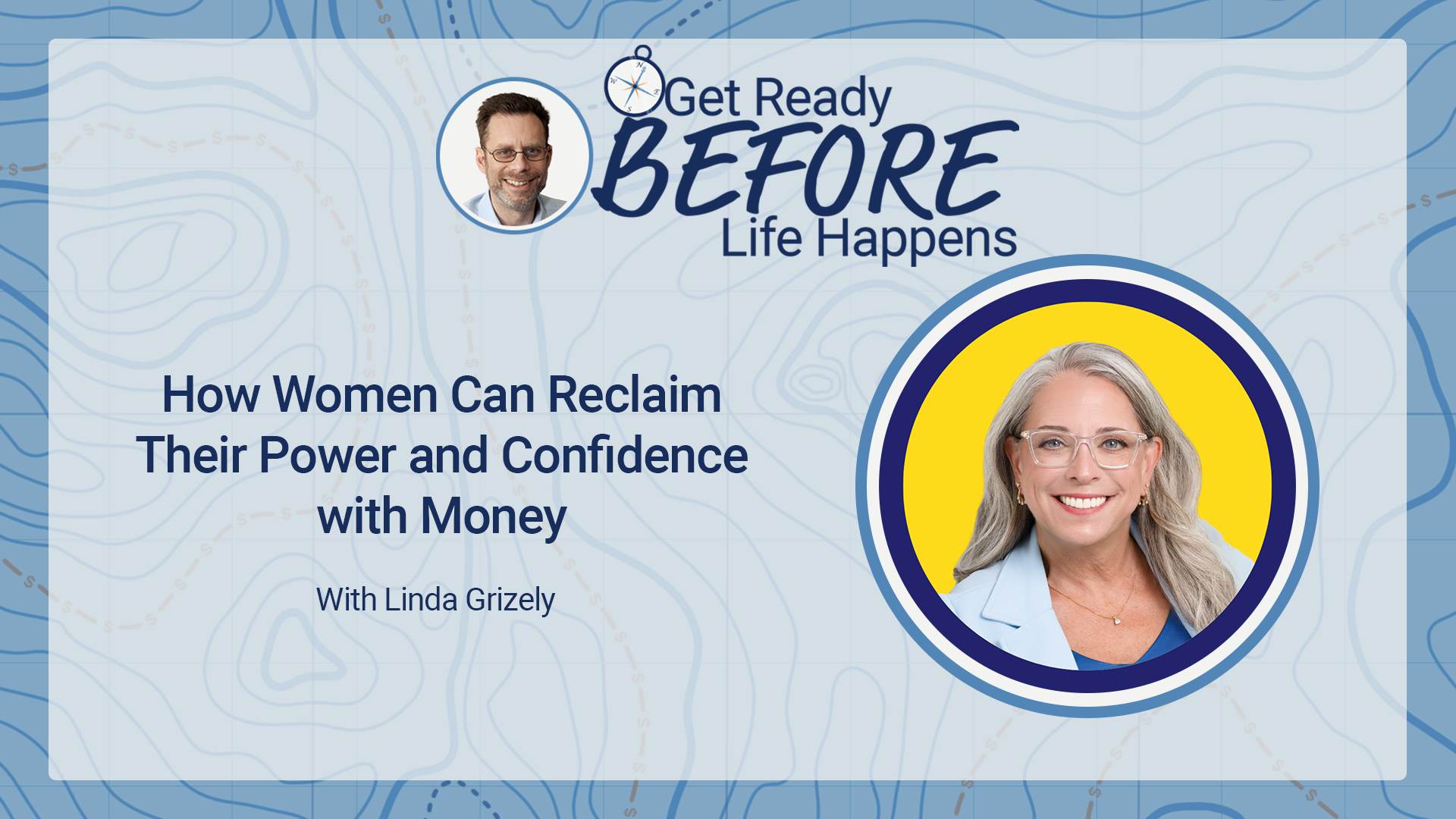
🎙️ Featured Readiness Conversation: How Women Can Reclaim Their Power and Confidence with Money
Are you ready to put yourself first with money?
On this episode of Get Ready Before Life Happens, Linda Grizely shares how women can build a healthier, more empowered relationship with money.
Key Takeaways
🔹 Create a “me-money” bucket that gives you permission to spend on yourself.
🔹 Women should stop putting themselves last when it comes to money decisions.
🔹 Open conversations about money builds confidence and reduces shame.
🔹 Reconnect with your power by understanding how you personally relate to money.
💭 Tony’s Take: When women engage with money without guilt or shame, confidence grows and decisions become clearer. Money works best when it supports who you are and the life you want to live.
🎙️ Linda Grizely and Tony Steuer on the Get Ready Before Life Happens Podcast (watch or listen)

➕ Also This Week: Why Defining “Enough” Changes How Women Think About Money
On this episode of The Get Ready Before Life Happens Podcast, Melissa Joy shares why women are capable, confident decision-makers and how judgment-free financial conversations create trust.
🔹 Practice courageous authenticity, you don’t need to be perfect.
🔹 Removing judgment creates space for open and honest financial conversations.
🔹 Advisors should ensure both partners are seen, heard, and included in every money conversation.
💭 Tony’s Take: When women define what “enough” looks like, money goes from being a source of pressure and becomes a tool for purpose, confidence, and joy.
🎙️ Melissa Joy and Tony Steuer on the Get Ready Before Life Happens Podcast (watch or listen)
Life Insurers Are Fact-Checking Your Application: How to Prepare
Insurers now use real-time data to verify your information. This can mean faster approvals, but it can also mean delays if your application gets flagged. Beyond speed, better data can lower premiums by removing the guesswork.
Thanks to Elizabeth Aldrich at Nerdwallet for the opportunity to share my insights.
Some of my favorite tips:
🔹 Information gaps in an applicant’s profile can lead to higher rates.
🔹 Provide context for major events like medical issues or bankruptcy
🔹 Tell the insurance company when you don’t know something, rather than guessing.
🔹 Independent agents can help you find the best fit for your specific medical and financial history
💭 Tony’s Take: Clarity and transparency lead to better outcomes. The more complete your story, the better decisions insurers can make.
📖 Read the article (here)
🌍 Conversations Shaping the Future of Money
Think Feel Do: Fix Your Money Mind
Financial decisions are shaped by what we think, feel, and do under pressure. It is tied to your identity, your security, your freedom, and your sense of whether or not you are going to be okay.
💭 Tony’s Take: When we understand the emotional layer of money, we can make decisions that better align with our goals and who we are.
🎙️ Ashley Quamme and Stoy Hall on the NoBS Wealth Podcast (listen)
Impact Investing for Women: Building Wealth and Shaping the Future
Over the next decade, roughly $30 trillion is expected to move into the hands of women, and the question isn't just what women will inherit. It's what they'll build. Includes a conversation about Our Sheconomy, a data-backed initiative that models what the world would look like if women had held equal economic and political power since 1925.
💭 Tony’s Take: We can all invest and make financial choices in alignment with our values regardless of how much money we have.
🎙️ Janine Firpo and Jean Chatzky on the HerMoney Podcast (Apple Podcasts)
🙋♀️ OurSheconomy: What if 100 years ago, women had become equal in our economy? The world would look completely different. Our sheconomy is a future forward 14-Week Campaign that turns women’s financial power into collective action and measurable impact—one week at a time. (learn more)
The Hidden Shame That Keeps You Stuck With Money
Family, culture, and stress can create money habits that don’t match the life you want, and shame can keep you stuck even when you’re doing “all the right things.”
💭 Tony’s Take: Recognizing that our cultural values can have a significant impact on how we handle our financial life allows us to incorporate our values into our decisions.
🎙️ Uma Viswanathan and Naseema McElroy on the Financially Intentional Podcast (YouTube).
What Does A First Car Really Cost?
The purchase price of a new car is only a small part of what it actually costs to own a car. Insurance, fuel, maintenance, repairs, registration, and parking can easily add up to thousands of dollars a year. In fact, even a “free” first car can cost today’s young drivers $4,000–$6,000 annually once the full costs of ownership are factored in!
💭 Tony’s Take: Understanding the total true cost of a purchase is an essential part of being a savvy consumer.
🛠️ Check out The First Car DIMS – DOES IT MAKE SENSE?® Score Calculator from Karen Holland and Gifting Sense (here)
⚡ Quick Hits
📖 The Cost of Constant Access. How subscriptions, media noise, and the attention economy quietly separate you from your money and alignment. By Preston Cherry (read).
📖 How to Be a DPOA for Your Parents for Elliott Appel for Kindness Financial Planning (read)
🎙️ The Gifting Tax Guide: How to Give Money to Family Tax-Free. Laura Adams on the Money Girl Podcast (Apple Podcasts)
📖 Will AI Replace Financial Advisors? By Ben Carlson for A Wealth of Common Sense (read)
📖 Dirty Dozen tax scams for 2026: IRS reminds taxpayers to watch out for dangerous threats (read)
🎤 Trailblazer Webinar with Dr. Meghaan Lurtz: The Psychology of Financial Planning with Sheryl O’Connor presented by Income Conductor on April 1st at 8:30am PT (register - free)

✅ Week 12 Action Item: Review your support for the next generation.
🌎 The big picture: Supporting the next generation creates opportunity and long-term impact.
🤔 Why it matters: Providing financial support helps with the high costs of education and early life expenses.
💡 Here’s what works:
✔ Choose a strategy aligned with your goals
✔ Consider gifting, college savings accounts, or direct support
✔ Coordinate support with your broader financial plan
💭 Tony’s Take: There are many ways to provide financial support to the children in your life, so consider what strategy best aligns with your values and long-term goals.
🤨 Question of the week: What steps are taking to support the next generation?
🛠️ Resources
Access The Get Ready Blueprint week 12 worksheet where you’ll review financial support strategies for the next generation along with related worksheets (Monthly Focus Area 3: Your Team).
Source: The Get Ready Blueprint: A 52 Week Guide to Changing the Way You Think About Money - an easy-to-use road map that illuminates how everything in your financial life fits together and shows you how to take the steps toward financial preparedness. (Amazon) (Bookshop)
🧠 Final Thought
Financial readiness is built through consistent, thoughtful action. When we align our decisions with our values and prepare ahead of time, money becomes a tool for confidence and coordination.
Stay ready.
Have meaningful money conversations.
Keep asking questions.
— Tony
Coming Next Week: Digital Financial Literacy, Inclusion, and Peace with Lalua Rahsiad, The Money Queen
Support: This is a free newsletter. However, I can only do this if you are willing to invest in financial readiness. So, if these conversations help you think differently about money or prepare for life’s financial what-ifs, support the Get Ready Movement at www.buymeacoffee.com/tonysteuer
